
UK visitor visa fees rose on 8 April 2026: £135 for six months, £506, £903 and £1,128 for the long-term versions. The figures that catch people out are the ones beside those — £234 for a long academic or medical visit, and £1,172 to extend once you are here.

UK Short Stay Visas
UK Visitor Visa Fees 2026: Complete Schedule
The 8 April 2026 Fee Schedule
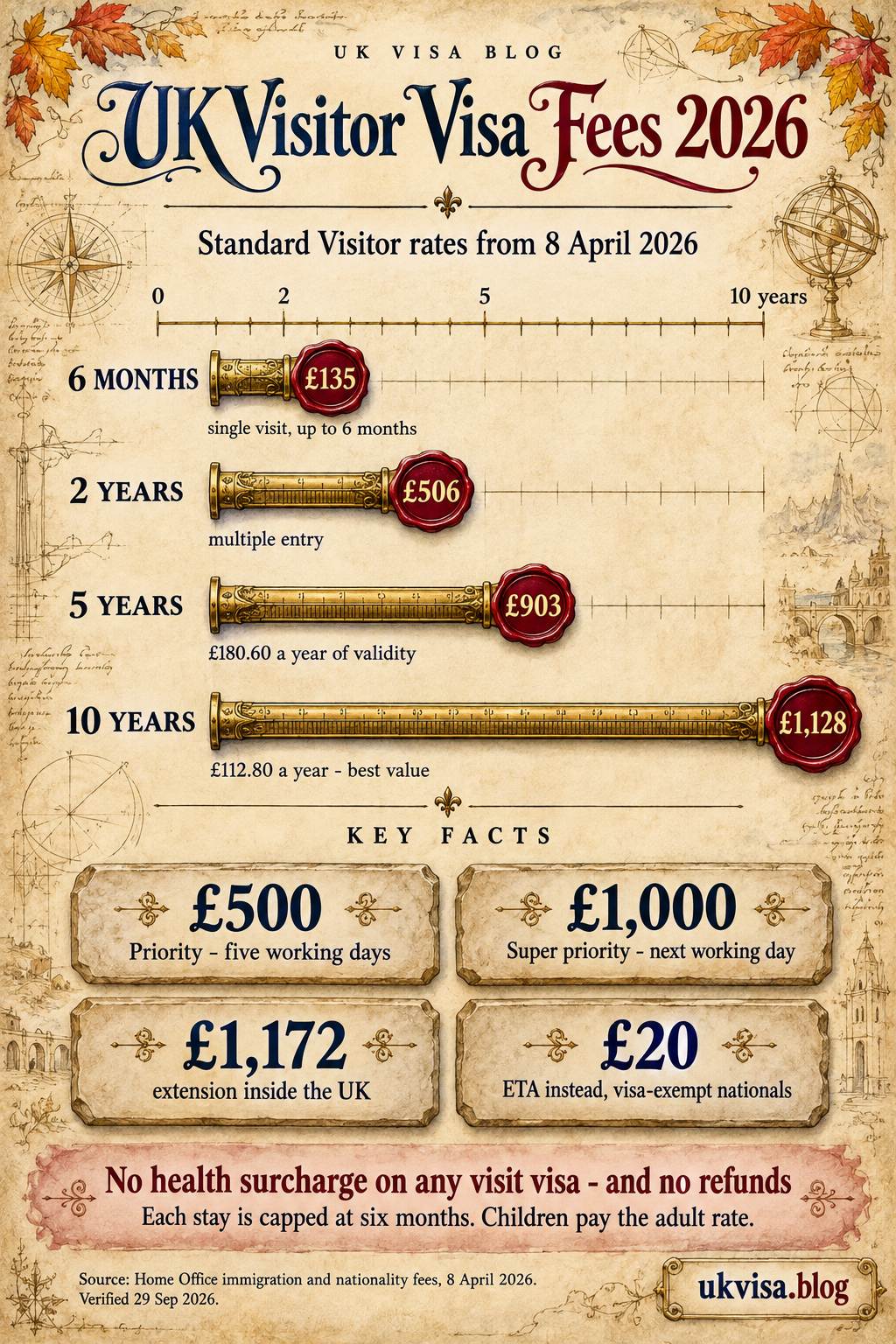
£135 for a Standard Visitor visa of up to six months, £506 for two years, £903 for five and £1,128 for ten. Priority adds £500 and super priority £1,000. Visitors pay no Immigration Health Surcharge. Every fee is non-refundable, including where a shorter visa than the one applied for is granted.
Home Office fees are set in sterling and apply worldwide — there is no nationality-based rate. What varies between countries is the commercial service charge at the visa application centre and the exchange rate on the day, not the fee itself.
Standard Visitor Fees, Before and After 8 April 2026
| Validity | Previous fee | From 8 April 2026 |
|---|---|---|
| Up to 6 months | £127 | £135 |
| 2 years | £475 | £506 |
| 5 years | £848 | £903 |
| 10 years | £1,059 | £1,128 |
Source: Home Office immigration and nationality fees, 8 April 2026.
The Other Visit Products
Several visit products sit outside the four standard durations, and two of them are routinely missed when people budget a trip.
Specialised Visit Fees
| Product | Fee | Purpose |
|---|---|---|
| Marriage Visitor visa | £135 | Marry, form a civil partnership, or give notice, within six months |
| Private medical treatment, 6 to 11 months | £234 | Treatment expected to run past six months |
| Visiting academic, 6 to 12 months | £234 | Research, exchange or senior clinical practice |
| Visitor extension in the UK | £1,172 | Main applicant and dependants |
| Visitor in transit, landside | £74.50 | Through border control, leaving within 48 hours |
| Direct airside transit | £41.50 | Changing flights without entering the UK |
| Electronic Travel Authorisation | £20 | Visa-exempt nationals, replacing a visa |
Source: Home Office immigration and nationality fees, 8 April 2026.
There Is No Longer a Paid Engagement Fee
Fee tables and older guides still list a permitted paid engagement visa. There is no such line in the current schedule, because the route closed and a paid engagement became something a Standard Visitor may do. You pay £135 for the ordinary visa and complete the engagement in the first month — see our paid engagements guide.
A visitor extension inside the UK is £1,172 — against £135 for the visa that got you here. Where a longer stay is foreseeable, buying the right product before travel is dramatically cheaper: £234 covers an academic or medical visit of up to twelve or eleven months respectively. The extension fee is the price of not having planned for it.
The Six-Month Fee
£135 buys a Standard Visitor visa valid up to six months, multiple-entry by default, covering England, Scotland, Wales and Northern Ireland on one application. Children pay the same as adults — there is no reduced rate for under-18s, so a family of four pays £540 in Home Office fees alone.
How Much Is a UK Tourist Visa in 2026?
For most people asking about UK tourist visa fees, the answer is £135 — the six-month Standard Visitor visa, which covers tourism, visiting family and most short business trips on the same fee. There is no cheaper single-entry version. The longer validities cost £506 for two years, £903 for five and £1,128 for ten, each still limiting any one stay to six months.
When You Can Apply
The earliest is three months before you travel. That window matters when planning: apply too early and the application is not accepted, leave it too late and standard processing of around three weeks eats into the trip. Our application form guide covers the questions, and the fee is calculated at the payment stage.
If Transit Is Your Only Reason for Coming
You can transit on a Standard Visitor visa, but if passing through is the whole purpose, a visitor in transit visa costs £74.50 instead of £135 — and a direct airside transit visa, where you never pass border control, £41.50. No transit visa is needed at all if you already hold an ETA, a Standard Visitor visa or a Marriage Visitor visa.
Long-Term Visitor Visas
The long-term products extend validity, not the length of any stay: six months remains the maximum per visit throughout. Their value is arithmetic — see our long-term visitor visa guide for choosing between them.
Cost per Year of Validity
| Validity | Fee | Per year |
|---|---|---|
| 6 months | £135 | £270 if you visit twice a year |
| 2 years | £506 | £253 |
| 5 years | £903 | £180.60 |
| 10 years | £1,128 | £112.80 |
Source: Home Office immigration and nationality fees, 8 April 2026.
Two Ways to Lose Money on a Long-Term Visa
An applicant under 18 receives validity running only until six months after their eighteenth birthday, however many years they paid for. And the Home Office can grant a shorter visa than the one applied for where some aspect of the case gives residual concern — the guidance encourages that over outright refusal. Neither produces a refund of the difference.
What You Actually Pay in Your Country
The Home Office fee is identical everywhere. Your total differs for three reasons, none of which is the visa itself.
- Exchange rate: the sterling fee is converted at the rate applying on the day you pay, so the local figure moves.
- Service centre charges: the commercial partner operating the visa application centre — VFS Global or TLScontact — charges separately for the appointment and services.
- Optional extras: document scanning, courier return, premium appointment slots and similar, all priced locally.
Check the exact local amount on the official fee calculator at visa-fees.homeoffice.gov.uk on the day you apply. Any figure quoted for the visa itself above the sterling equivalent of £135 is a third-party charge, not the Home Office fee — a distinction worth insisting on with agents.
Priority and Super Priority
These are optional add-ons to the standard fee, subject to availability at your centre. They did not change on 8 April 2026 — only the visa fees rose. Full detail sits in our priority visa guide.
What Faster Decisions Cost
| Service | Extra fee | Target |
|---|---|---|
| Standard | Included | About three weeks |
| Priority | £500 | Five working days |
| Super priority | £1,000 | Next working day |
Source: Home Office immigration and nationality fees, 8 April 2026.
A six-month visa with priority is £635; with super priority £1,135. These buy queue position, not a different decision — the genuine visitor test is unchanged, and a case needing further checks falls out of the fast lane. See our guides to processing times and extending a visit.
Costs Beyond the Fee
Budget for the visa application centre’s own charges, which vary by country and by the services you take. What you do not budget for is the health surcharge.
No Immigration Health Surcharge on Any Visit Visa
The surcharge applies to permission granted for more than six months. Visitors never pay it, including on ten-year visas, because each individual stay is capped at six months. The trade-off is that visitors have no NHS access beyond emergency treatment, which makes travel insurance a practical necessity rather than an optional extra.
The ETA Alternative
Visa-exempt nationals pay £20 for an Electronic Travel Authorisation instead of any visa fee. It is valid for two years or until the passport expires, whichever comes first, and covers visits of up to six months. Applying for a £135 visa when an ETA would do wastes the difference, and the fee is not refundable.
Do Not Buy Flights and Hotels to Support the Application
GOV.UK’s guide to supporting documents lists flight bookings and hotel bookings among the documents that are less useful as evidence — flights count only where you are transiting. The guidance adds a warning in terms: submitting documents does not guarantee success, and you should bear that in mind when making bookings, particularly where the visa must be granted before you travel.
The practical consequence for your budget is real. Non-refundable travel booked to strengthen an application adds risk without adding weight, and the £135 fee is gone whether or not the trip happens. Book after the decision, or book flexibly.
Who Pays the Fee
Either the applicant or a third party. Where someone else pays, say so on the form and include their evidence — our visitor visa sponsorship guide covers what a sponsor must show, and business visitors commonly have the UK host or their overseas employer pay.
One condition catches people. Where the third party is in the UK, the caseworker guidance requires that they are not in breach of immigration law at the date of decision. A sponsor whose own status is irregular can sink an otherwise sound application, whatever their means.
Sources: the Home Office immigration and nationality fee tables for 8 April 2026; Appendix V of the Immigration Rules; and Home Office visit caseworker guidance, version 17.0 of 25 February 2026. Fees across other routes sit in our UK visa fees overview and our ILR and citizenship fees guide, and the document side in our supporting documents guide. Figures verified 22 August 2026.
Frequently Asked
Questions about UK Visitor Visa Fees
From 8 April 2026: £135 for up to six months, £506 for two years, £903 for five and £1,128 for ten. These are Home Office fees applying worldwide regardless of nationality. Visa application centres charge separately for the appointment and any optional services. Children pay the same as adults.
£1,172 for the main applicant and dependants — nearly nine times the £135 visa. Where a longer stay is foreseeable, buying the right product before travel is far cheaper: £234 covers a visiting academic for up to twelve months or private medical treatment for up to eleven, against £135 plus £1,172 if you extend instead.
No. The current fee schedule contains no permitted paid engagement line, because the separate route closed and a paid engagement became an activity a Standard Visitor may undertake. You pay the ordinary £135 fee and must complete the engagement within the first month after arriving in the UK.
No earlier than three months before you travel. With standard processing running at around three weeks from biometrics, applying near the start of that window leaves room for the unexpected without the application being rejected as premature. Priority services shorten the decision but not the three-month rule.
Marginally, if you visit at least twice. Two separate six-month visas cost £270 against £506 for two years, which works out at £253 a year rather than £270 — plus you avoid a second application. The saving grows with validity: the ten-year visa is £112.80 a year, the cheapest per year of any option.
£135 for six months, exactly as everywhere else — there is no nationality-based rate, discount or premium. The local-currency amount depends on the exchange rate applying when you pay, and the visa application centre adds its own service charge. Check the exact figure on visa-fees.homeoffice.gov.uk on the day you apply.
£500 on top of the visa fee for a target of five working days, or £1,000 for a next-working-day decision. A six-month visa with priority therefore costs £635, and with super priority £1,135. Priority fees did not change on 8 April 2026, and availability varies by country.
No. The fee is not returned if the application is refused, if you withdraw it, or if the Home Office grants a shorter visa than the one you applied for. Priority service fees may be refunded where the service standard is missed, but the visa fee itself is not refundable in any circumstances.
No, on any visit visa including the ten-year one. The surcharge attaches to permission granted for more than six months, and each visit is capped at six months however long the visa is valid. Visitors have no NHS access beyond emergency care, so travel insurance covers what the surcharge would otherwise buy.
At £112.80 a year it is the cheapest option per year of validity, and worth it for someone visiting at least annually with stable circumstances. Against that: nothing is refunded if plans change, and an applicant under 18 will only receive validity running to six months after their eighteenth birthday whatever they paid.