
UK entry clearance fees rose on 8 April 2026. This page sets out what each route costs from outside the UK, what employers pay on top, and where the health surcharge lands. Every figure is per applicant, and the surcharge is often larger than the visa fee itself.

Entry Clearance Fees
UK Visa Fees From Outside the UK in 2026
What This Covers
Entry clearance fees apply when you apply from outside the UK. They are generally lower than the equivalent in-country application, which is covered on our page on Home Office fees from inside the UK. Dependants apply and pay separately at the same rate on most routes.
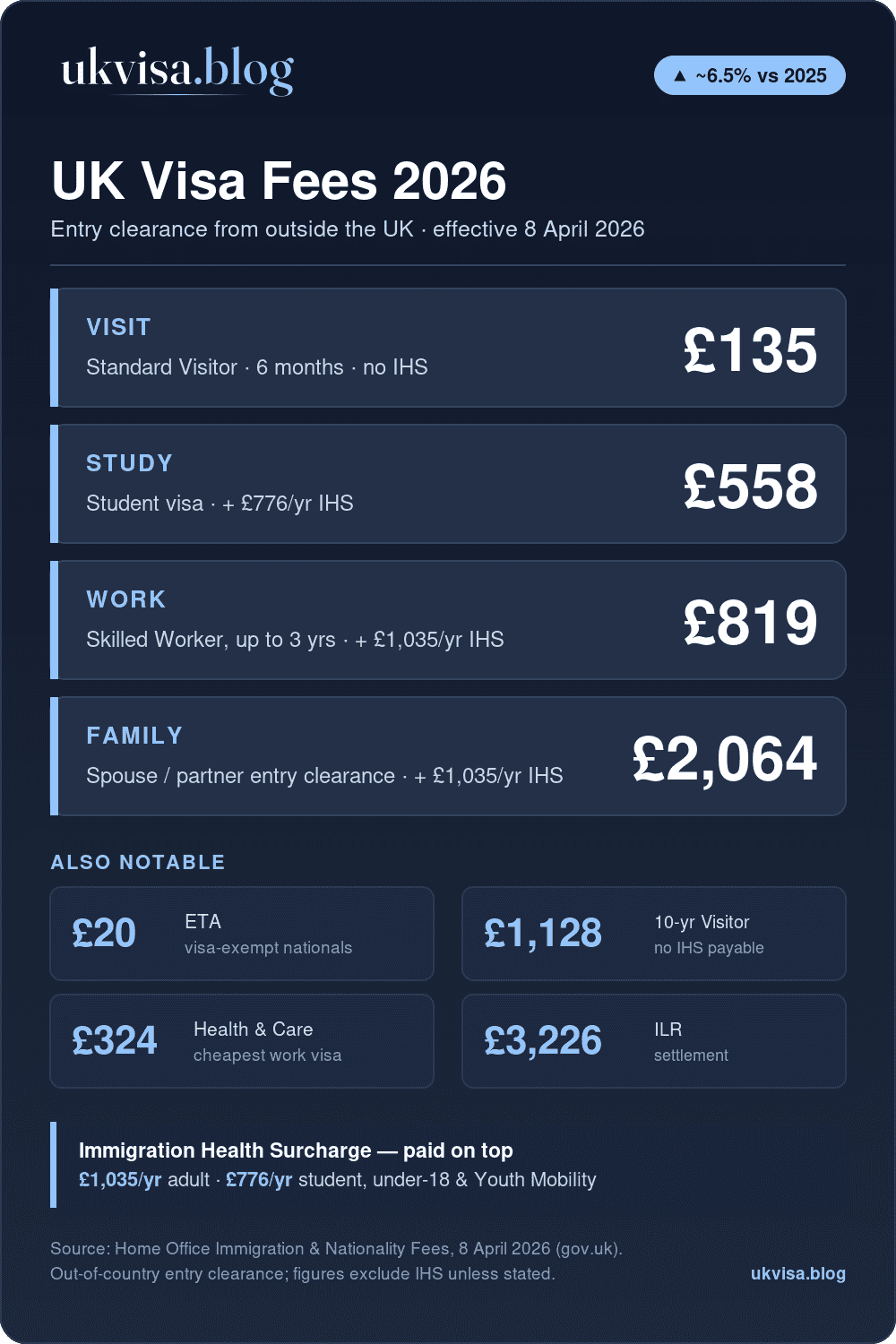
From 8 April 2026: a six-month visit visa is £135; Student and Child Student £558; Skilled Worker £819 up to three years and £1,618 beyond; Health and Care Worker £324 and £628; the family route to settlement £2,064; and an Electronic Travel Authorisation £20. The health surcharge is £1,035 a year, or £776 for students, under-18s and Youth Mobility.
Visit Fees
Visit and Transit From 8 April 2026
| Application | Previous fee | From 8 April 2026 |
|---|---|---|
| Visit, up to 6 months | £127 | £135 |
| Visit, 2 years | £475 | £506 |
| Visit, 5 years | £848 | £903 |
| Visit, 10 years | £1,059 | £1,128 |
| Landside transit | £70 | £74.50 |
| Direct airside transit | £39 | £41.50 |
| Electronic Travel Authorisation | £16 | £20 |
Source: Home Office immigration and nationality fees, 8 April 2026. Checked 22 August 2026.
The Standard Visa Fee
When people ask for the standard visa fee for the UK, they usually mean the six-month Standard Visitor visa: £135. The two-year visit visa is £506, five years £903 and ten years £1,128 — the same visa each time, priced by validity, with each stay still capped at six months.
Visitors pay no health surcharge. Our pages on visitor fees in detail, the standard visitor route and long-term visit visas cover which option works out cheapest, and our page on the ETA scheme covers who needs one instead of a visa.
Study Fees
A Student or Child Student application costs £558 from outside the UK, up from £524. Dependants pay the same. Add the health surcharge at £776 a year for the whole period of permission, which for a three-year degree is a substantially larger figure than the visa fee.
Our pages on the student route, short-term study and the Graduate route cover what each involves. The Graduate route is applied for from inside the UK, so it sits on the in-country page.
Work Fees
Work Routes From 8 April 2026
| Route | Previous fee | From 8 April 2026 |
|---|---|---|
| Skilled Worker, up to 3 years | £769 | £819 |
| Skilled Worker, over 3 years | £1,519 | £1,618 |
| Health and Care Worker, up to 3 years | £304 | £324 |
| Health and Care Worker, over 3 years | £590 | £628 |
| Global Talent, endorsement not required | £766 | £766 |
| Global Talent, endorsement stage | £205 | £205 |
| High Potential Individual | £880 | £880 |
| Innovator Founder | £1,274 | £1,357 |
| Youth Mobility Scheme | £319 | £340 |
| Temporary work routes | £319 | £340 |
Source: Home Office immigration and nationality fees, 8 April 2026. Checked 22 August 2026.
The three-year line doubles the Skilled Worker fee, and it is set by the length of the certificate of sponsorship rather than by anything you choose. Where the role allows either, raise it with the employer before the certificate is assigned. See our pages on Skilled Worker, Health and Care Worker and work visa fees.
Three routes held their fees flat: Global Talent at both stages and the High Potential Individual route. Others are covered on our pages on the Innovator Founder route, the Scale-up route and temporary work routes.
Where the Surcharge Overtakes the Fee
On study and work routes the surcharge is usually the bigger number. A student granted three years pays £558 for the visa and £2,328 in surcharge. A Skilled Worker granted three years pays £819 and £3,105. Reading only the headline fee understates the real cost by three or four times.
It also means the length of permission you request is a spending decision. A shorter grant costs less upfront but means paying a second application fee sooner, so the arithmetic depends on how long you expect to stay rather than on which single figure looks smaller.
What the Employer Pays
- Worker sponsor licence, small or charitable: £611.
- Worker sponsor licence, medium or large: £1,682.
- Student or temporary worker sponsor licence: £611.
- Certificate of sponsorship: £525 for each one assigned.
- Immigration skills charge: charged per year of sponsorship on most work routes — see the GOV UK skills charge pages.
The certificate fee has risen sharply in recent years and is now a material part of the cost of hiring from abroad. Sponsors should budget the licence, the certificate, the skills charge and the applicant's own fee and surcharge together, because in practice the employer often meets several of them.
Family Fees
Family Routes From 8 April 2026
| Application | Previous fee | From 8 April 2026 |
|---|---|---|
| Route to settlement, partner, parent or child | £1,938 | £2,064 |
| Other dependent relative | £3,413 | £3,635 |
| Refugee dependent relative | £424 | £452 |
| Indefinite leave to enter | £3,029 | £3,226 |
Source: Home Office immigration and nationality fees, 8 April 2026. Checked 22 August 2026.
See our pages on the spouse route and its financial requirement, the fiancé route, the parent route, adult dependent relatives, dependants generally and the BN(O) route.
The Health Surcharge
£1,035 a year at the standard rate. £776 a year for students, their dependants, Youth Mobility Scheme holders and anyone under 18 at the date of application. It is charged for the whole period of permission and paid upfront with the application, so it dominates the total on longer grants.
Applications made from outside the UK for six months or less carry no health surcharge. That is why a visit visa costs £135 and nothing more, and why the length of permission you request on other routes is a financial decision as well as a practical one.
The surcharge is refundable where permission is refused, withdrawn, or granted for less than you paid for — unlike the application fee, which is not. Our page on the health surcharge covers exemptions and how part years are calculated, and the GOV UK surcharge pages carry the rates.
Priority Services
Priority costs £500 outside the UK for a five working day target. Super priority costs £1,000 for a next working day target. Both are charged per applicant, and both buy queue position rather than a better decision — see our page on priority services and the GOV UK faster decision pages.
Priority Is Not Available Everywhere
The faster services depend on the country you apply in and the route you apply on, and they are withdrawn during periods of high demand. Where an application is taken out of the fast queue for verification or an interview, it reverts to standard handling and the fee is not returned, because the service was made available.
Check what is offered at your own visa application centre before building a timetable around it. Where priority is unavailable, the only lever left is applying earlier — GOV.UK allows most applications to be made up to three months before travel.
Fee Waivers
Waivers are narrow and route-specific. They exist principally where refusing an application would breach human rights and the applicant cannot afford the fee — most often on family and private life routes made from inside the UK. They are not available as a general hardship provision on work or study routes.
Where a waiver applies, it can cover the fee and the health surcharge. The evidential threshold is real: income, outgoings, savings and accommodation all have to be documented. Our page on human rights applications covers the context in which waivers arise.
What Changed on 8 April 2026
- Visit, six months: £127 to £135.
- Student and Child Student: £524 to £558.
- Skilled Worker: £769 to £819, and £1,519 to £1,618.
- Family route to settlement: £1,938 to £2,064.
- Indefinite leave: £3,029 to £3,226.
- ETA: £16 to £20.
- Unchanged: Global Talent at £205 and £766, and High Potential Individual at £880.
Why the Figures Are What They Are
Immigration fees are set by regulations rather than by cost recovery. Parliament permits fees to be charged above the administrative cost of processing, taking into account wider benefits and the funding of the system, which is why settlement and nationality applications cost multiples of what the paperwork consumes.
The practical consequence for applicants is that arguing a fee is disproportionate to the work involved goes nowhere. The figure is a policy decision, revised by statutory instrument, usually in the spring. Planning around the annual uplift is more useful than expecting one.
What the Fee Actually Buys
A decision, and nothing else. It is not refunded on refusal, and a grant shorter than the one applied for produces no partial refund. Priority buys speed rather than quality. The one element that does return money is the health surcharge, which is refundable where permission is refused or shortened.
That asymmetry should shape where the money goes. Spending on evidence — properly formatted statements, a clear employer letter, certified translations — protects the fee. Spending on speed protects only the timetable. Our pages on supporting documents and refusal grounds cover what caseworkers are actually looking for.
Working Out Your Total
- The application fee: from the tables above, per applicant.
- The health surcharge: £1,035 or £776 a year, for the whole period of permission.
- Each dependant: their own fee and their own surcharge.
- Priority, if needed: £500 or £1,000, per applicant.
- Testing and translation: English tests, tuberculosis certificates, certified translations.
- The visa application centre: optional services vary by country.
A worked example: a Skilled Worker granted three years pays £819 plus £3,105 in surcharge, before the employer's £525 certificate and skills charge. A partner applying on the five-year route pays £2,064 plus surcharge for the grant. Our pages on the application form and processing after biometrics cover what happens once you have paid.
Sources: the Home Office immigration and nationality fees table effective 8 April 2026, and the GOV UK health surcharge rates. Figures verified 22 August 2026.
Frequently Asked
Visa Fee Questions
How much is a UK visit visa in 2026?
£135 for up to six months from 8 April 2026. Long-term options are £506, £903 and £1,128 for two, five and ten years.
How much is a Skilled Worker visa?
£819 from outside the UK where the certificate covers up to three years, and £1,618 where it covers more. Health and Care Worker applicants pay £324 and £628.
How much is the health surcharge?
£1,035 a year at the standard rate and £776 a year for students, their dependants, Youth Mobility holders and under-18s, paid upfront for the whole period of permission.
Do children pay the same fee as adults?
On most routes yes. Child Student is £558, the same as Student. The surcharge is charged at the lower £776 rate for anyone under 18 at the date of application.
Is the fee refunded if I am refused?
No. The application fee is consumed by the decision. The health surcharge is refundable where the application is refused, withdrawn, or granted for less than you paid for.
Which fees did not go up in April 2026?
Global Talent held at £205 for the endorsement stage and £766 where no endorsement letter is required, and High Potential Individual held at £880.
How much does an ETA cost?
£20 from 8 April 2026, up from £16. It is not a visa but a permission to travel for people who do not need one.
Can I get a fee waiver?
Only in narrow circumstances, principally human rights based family and private life applications where you cannot afford the fee. Income, outgoings and savings all have to be evidenced.
Why is a three-year Skilled Worker visa so much cheaper than a three-year-and-one-day one?
The fee band changes at exactly three years, set by the length of the certificate of sponsorship. It is worth checking before the certificate is assigned.
Do employers have to pay any of this?
Sponsors pay the licence, £525 per certificate of sponsorship and the immigration skills charge. Whether they also cover the applicant's fee and surcharge is a matter of contract.